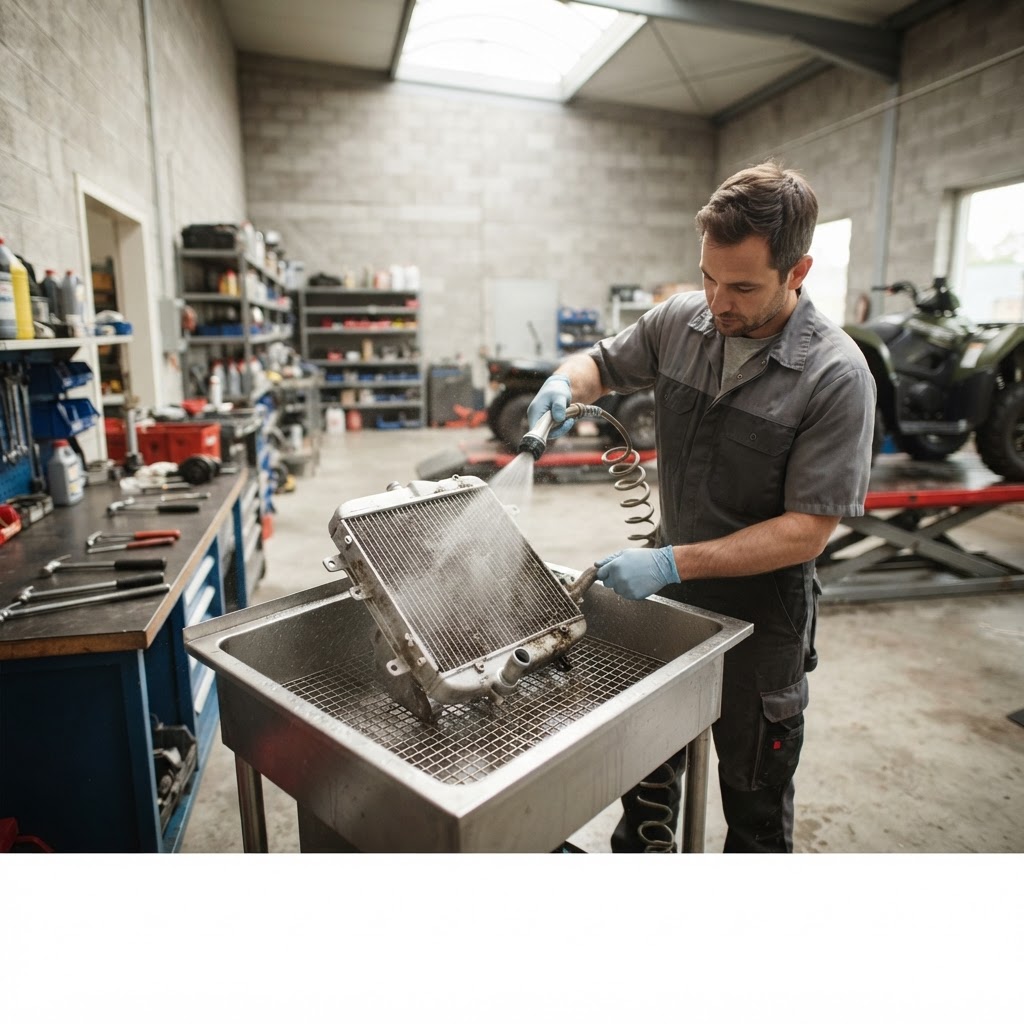
Is your ATV engine overheating? Learn the common causes, how to prevent trail-side failures, and when to bring your machine into our shop for repairs.
ATV engine overheating is a common issue that can lead to catastrophic internal damage if ignored. Whether you are hauling heavy loads or pushing your machine through deep mud, your cooling system is the primary defense against premature engine failure. If your temperature light flickers or you notice a loss of power, stop immediately to prevent warping cylinder heads or blowing head gaskets. Most overheating issues stem from simple maintenance oversights, such as clogged radiator fins, low coolant levels, or a failing thermostat. By staying proactive with your cooling system, you can avoid expensive engine rebuilds and keep your ride reliable for years to come.
Common Causes of ATV Engine Overheating
Off-road environments are inherently harsh. Dust, mud, and debris act as insulators, trapping heat against your engine and radiator. When your cooling system cannot dissipate heat effectively, the engine temperature spikes rapidly.
- Clogged Radiator Fins: Mud and trail debris block airflow, preventing the radiator from cooling the fluid effectively.
- Low Coolant Levels: Leaks in hoses or a faulty radiator cap can lead to air pockets, which prevent proper circulation.
- Cooling Fan Failure: If your fan doesn't kick on when the engine reaches operating temperature, you will overheat quickly at low speeds or while idling.
- Worn Water Pump: A failing impeller or seal can restrict coolant flow, leading to localized hot spots within the engine block.
- Thermostat Issues: A stuck-closed thermostat prevents coolant from reaching the radiator, trapping heat inside the engine.
Proactive Maintenance to Prevent Overheating
Preventing an overheat is significantly cheaper than fixing the aftermath. We recommend a consistent inspection routine, especially if you ride in extreme conditions. Check our parts-categories for high-quality cooling system components, including upgraded radiators and hoses, to ensure your machine is ready for the trail.
The Pre-Ride Cooling Checklist
- Inspect Radiator Fins: Use a low-pressure water spray to clear out dust and mud. Never use a high-pressure washer directly on the fins, as it can bend them and restrict airflow.
- Check Coolant Levels: Always check the reservoir when the engine is cold. If you are consistently losing fluid, inspect your hoses and clamps for signs of seepage.
- Test the Fan: Ensure your cooling fan spins freely and engages when the engine reaches operating temperature.
- Monitor Fluid Condition: If your coolant looks rusty or contains debris, it is time for a flush. Old coolant loses its anti-corrosive properties, which can lead to internal blockages.
When to Seek Professional Service
Sometimes, the issue goes beyond a simple flush or cleaning. If you notice white smoke from the exhaust, milky-colored engine oil, or persistent overheating despite a clean radiator, you may have a more serious mechanical failure. Our technicians specialize in diagnosing complex cooling issues, from water pump rebuilds to head gasket replacements. Visit our shop for a professional diagnostic test, including compression and leak-down testing, to identify the root cause before it leads to a full engine failure. We work with all major brands to ensure your machine gets the exact parts it needs.
Conclusion
Managing your ATV engine overheating risks is essential for any serious rider. By keeping your radiator clean, monitoring your coolant levels, and addressing minor leaks early, you can significantly extend the life of your engine. Don't wait for a trail-side breakdown to take your cooling system seriously. If you are unsure about the health of your machine, stop by our shop for a quick inspection. We are here to help you stay on the trails and out of the garage.
Frequently Asked Questions
Why does my ATV overheat only when idling?
If your ATV overheats at idle but stays cool while moving, the issue is likely your cooling fan or the fan switch. When moving, airflow naturally cools the radiator, but at low speeds, the fan must force air through the fins. Check your fuse, relay, and the fan motor itself.
Can I use water instead of coolant in my ATV?
Using straight water is not recommended. Coolant contains additives that prevent corrosion, lubricate the water pump, and raise the boiling point of the fluid. In an emergency, you can use water to get home, but you must flush the system and replace it with the correct coolant mix immediately.
How often should I flush my ATV cooling system?
For most riders, a coolant flush every two years or 500 hours is sufficient. However, if you frequently ride in deep mud or water, you should inspect the fluid more often. If the coolant appears discolored or contains sediment, flush it sooner to prevent radiator clogging.
What are the signs of a blown head gasket?
Common symptoms include white smoke from the exhaust, bubbles in the radiator reservoir, a sudden loss of coolant without visible leaks, or oil that looks like a chocolate milkshake. If you suspect a head gasket failure, stop riding immediately to avoid further engine damage.
Is it safe to open the radiator cap when the engine is hot?
Never open the radiator cap while the engine is hot. The cooling system is pressurized, and removing the cap can cause boiling coolant to spray out, resulting in severe burns. Always wait at least 30 to 60 minutes for the engine to cool completely before checking fluid levels.