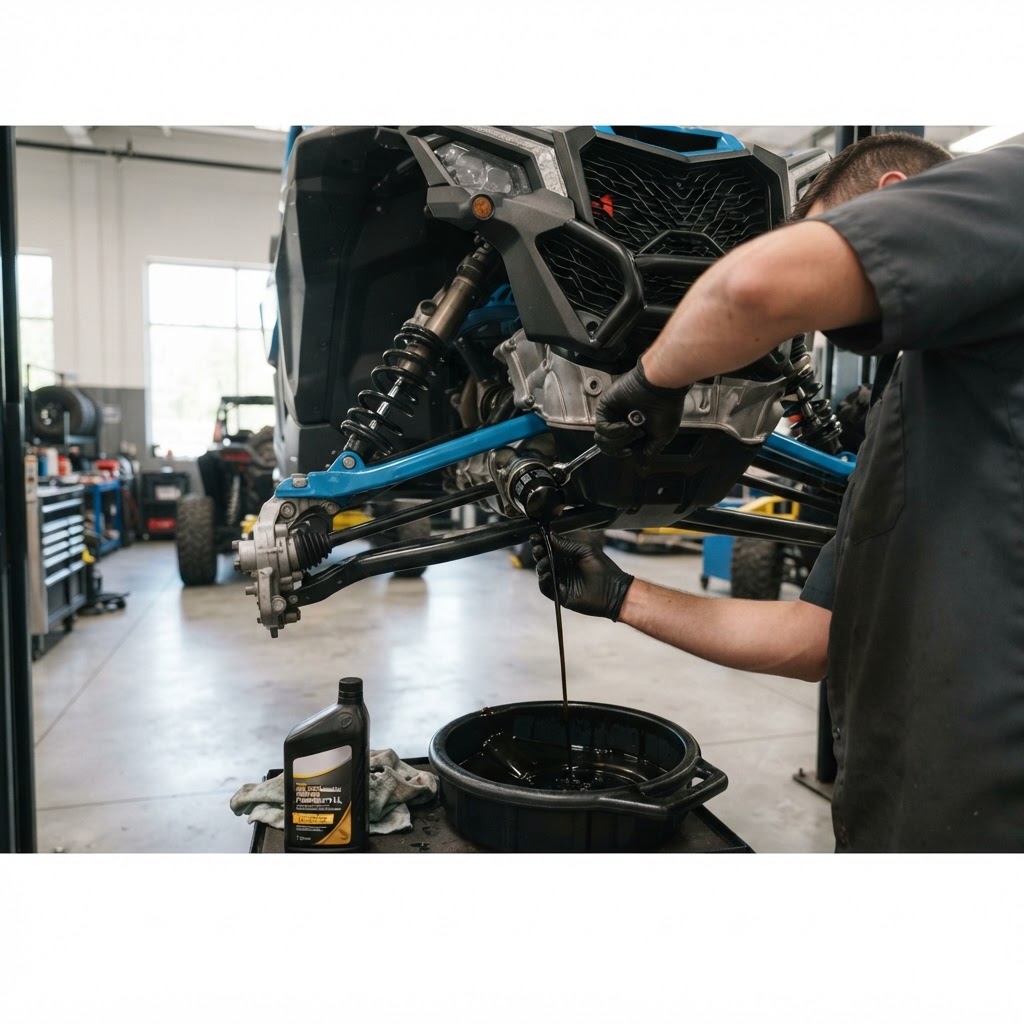
Learn the correct ATV oil change frequency for your machine. Discover how riding conditions, engine hours, and synthetic oil impact your service schedule.
Maintaining the correct ATV oil change frequency is the single most effective way to extend the life of your engine and ensure reliable performance on the trail. For most powersports enthusiasts, the standard recommendation is to change your engine oil and filter every 50 to 100 hours of operation, or at least once per season, whichever comes first. Because powersports engines operate at higher RPMs and face harsher environmental stressors than standard automotive engines, adhering to this schedule is critical for preventing premature wear and internal sludge buildup. If you are unsure about your specific model's requirements, our team at the shop can help you identify the exact specifications for your build.
Why Engine Hours Matter More Than Mileage
Unlike passenger vehicles that rely on odometers, most ATVs and UTVs track service intervals by engine hours. This is because an hour meter provides a more accurate representation of engine stress. An ATV idling in the pits, crawling through deep mud, or working under a heavy load in low gear accumulates significant internal wear without adding a single mile to the odometer. If your machine does track mileage, a general rule of thumb is to perform an oil change near the 1,000-mile mark, but always prioritize the hour meter if available.
Factors That Shorten Your Service Interval
While 100 hours is a common benchmark, your specific riding style may require more frequent maintenance. Severe operating conditions accelerate oil breakdown and contamination, forcing you to shorten your interval to 25 or 50 hours. Consider these factors:
- Extreme Environments: Frequent deep water crossings, mud bogging, and riding in heavy, fine dust will contaminate your oil rapidly.
- High-Load Tasks: Towing, plowing, or hauling heavy cargo keeps the engine under constant load, increasing operating temperatures.
- Performance Riding: Racing, dune riding, or aggressive trail sessions at high RPMs stress the oil film and shear the viscosity additives.
- Temperature Extremes: Operating in freezing cold or extreme desert heat places additional strain on the oil's ability to lubricate effectively.
The Importance of the Break-In Oil Change
If you have recently purchased a new machine, the break-in period is the most critical time for engine health. New engines shed microscopic metal particles as internal components seat against one another. Most manufacturers require an initial oil change within the first 20 to 25 hours. Skipping this step allows abrasive metal grit to circulate through your engine, which can cause long-term damage. Always check your owner's manual for the specific break-in procedure, as this service sets the tone for the engine's entire lifespan. You can browse our selection of parts-categories to find the correct filters and fluids for your initial service.
Choosing the Right Oil for Your Machine
Powersports engines often share a single oil sump between the engine and the wet clutch. This means you must use an oil specifically formulated for powersports applications, typically meeting JASO MA2 standards. Standard automotive oils often contain friction modifiers that can cause your wet clutch to slip, leading to poor performance and costly repairs. Whether you prefer brands like AMSOIL or OEM-specific fluids, always ensure the viscosity matches the requirements listed in your manual. Using the wrong oil can compromise your warranty and engine longevity.
Conclusion
Staying consistent with your ATV oil change frequency is the best insurance policy for your investment. By monitoring your engine hours, adjusting for your specific riding conditions, and using high-quality, application-specific lubricants, you can avoid common mechanical failures. If you need assistance with your next service or want to see our latest builds, feel free to visit our gallery or stop by our shop to speak with our technicians.
FAQ
How often should I change my ATV oil if I rarely ride?
Even if you do not reach the 50-hour mark, you should change your oil at least once per year. Oil sitting in an engine for long periods attracts moisture and develops acids that can corrode internal components. Fresh oil before storage is essential for long-term protection.
Can I use automotive oil in my ATV?
It is generally not recommended. Most ATVs use a wet clutch system that requires specific additives found in powersports-grade oil. Automotive oils often contain friction modifiers that can cause clutch slippage and premature wear. Always check your manual for JASO certification requirements.
Does the oil filter need to be changed every time?
Yes, you should always replace the oil filter during every oil change. A fresh oil change is ineffective if the oil is immediately circulated through a clogged or dirty filter. The filter traps the contaminants that your oil has collected, and replacing it ensures your engine stays clean.
What happens if I ignore the oil change interval?
Ignoring your service schedule leads to oil breakdown, which results in sludge formation and increased friction. Over time, this causes accelerated wear on bearings, cylinder walls, and the transmission. Eventually, this neglect leads to catastrophic engine failure that is far more expensive than regular maintenance.
Should I use synthetic or conventional oil?
Full synthetic oil is highly recommended for ATVs and UTVs. It offers superior protection against high heat, resists shearing better than conventional oil, and provides better flow during cold starts. Given the harsh conditions these machines face, the extra cost of synthetic oil is a worthwhile investment for engine longevity.