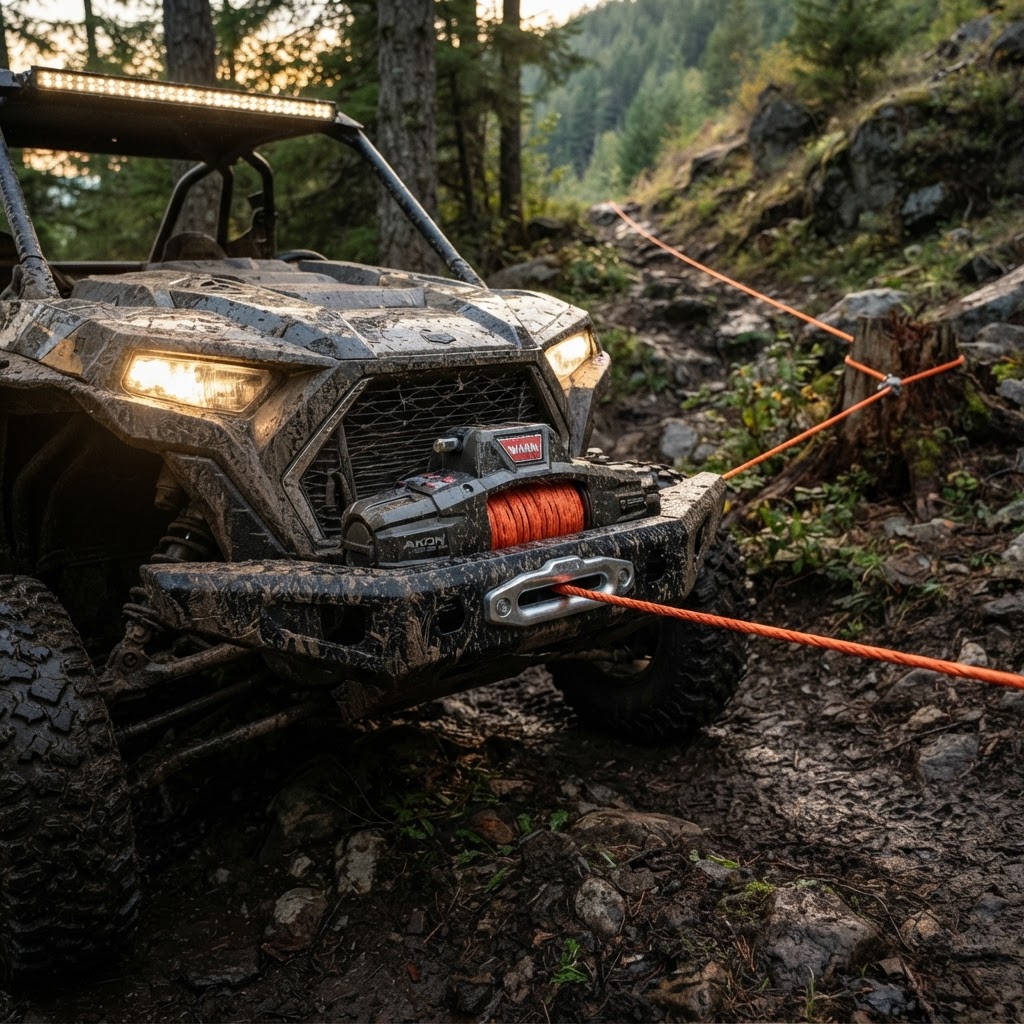
Deciding between synthetic winch rope vs steel cable for UTV recovery? Compare safety, weight, and durability to choose the right line for your off-road machine.
Choosing between synthetic winch rope vs steel cable for UTV recovery depends on your riding environment, safety priorities, and maintenance habits. For most modern UTV owners, synthetic rope is the superior choice because it is significantly safer during a failure, lighter for better front-end handling, and easier to handle manually. However, steel cable remains the gold standard for utility-focused machines operating in highly abrasive environments like jagged rock gardens or commercial logging sites where friction resistance is the primary concern.
The Core Differences: Synthetic Winch Rope vs Steel Cable for UTV
When we look at the evolution of recovery gear in our shop, the shift toward synthetic has been massive. Synthetic lines are typically made from Ultra-High-Molecular-Weight Polyethylene (UHMWPE), such as Dyneema or Spectra. These fibers are incredibly strong—often stronger than steel of the same diameter—but they behave very differently under tension.
Steel cable, the traditional choice, is made of braided carbon steel wires. It is rugged and heat-resistant but carries a significant amount of kinetic energy. If a steel cable snaps, it can whip back with enough force to slice through bodywork or cause fatal injuries. Synthetic rope, by contrast, has very little stretch and low mass; if it breaks, it generally loses its energy and drops to the ground, making it the preferred option for group rides and family outings.
Comparison Table: Synthetic vs. Steel
| Feature | Synthetic Winch Rope | Steel Winch Cable | | :--- | :--- | :--- | | Weight | Extremely Light (Floats) | Heavy (Adds front-end sag) | | Safety | High (Low kinetic energy) | Moderate (High snap-back risk) | | Durability | Sensitive to UV and Heat | High Abrasion Resistance | | Maintenance | Requires regular washing | Requires lubrication/inspection | | Repairability | Field-repairable (Splicing) | Not repairable in the field | | Cost | Higher initial investment | Budget-friendly |
Pros and Cons of Synthetic Winch Rope
Synthetic rope has revolutionized the way we build custom UTVs. One of the most immediate benefits is weight reduction. A 50-foot length of 1/4-inch synthetic rope weighs less than a pound, whereas the equivalent steel cable can weigh 10 to 15 pounds. When you are trying to keep your suspension dialed in for high-speed trail riding, removing 10 pounds from the very front of the machine helps prevent nose-diving and preserves your brands of choice for shocks and springs.
Advantages
- Safety First: Because it doesn't store energy like a spring, a break is rarely catastrophic.
- Ease of Use: It doesn't develop "fishhooks" (broken wire strands) that can tear open your hands. You can handle it without heavy leather gloves, though we still recommend them.
- Floatation: If you are winching out of a deep mud hole or a river crossing, synthetic rope floats on the surface, making it much easier to find and attach to a parts-categories recovery point.
- Field Repairs: If you snap a synthetic line on the trail, you can perform a temporary bury splice to get yourself home. You cannot do this with steel.
Disadvantages
- UV Degradation: Sunlight is the enemy of UHMWPE. Over time, UV rays break down the fibers, making them brittle. Most high-end ropes come with a protective sleeve, but the exposed sections will eventually fade and weaken.
- Heat Sensitivity: Winch drums can get hot during long pulls. If the rope is wrapped directly onto a drum that houses an internal brake, the heat can melt the inner layers of the rope.
- Internal Abrasion: Mud and sand can work their way into the braid. As the rope flexes under load, these tiny particles act like sandpaper, cutting the fibers from the inside out.
Pros and Cons of Steel Winch Cable
While synthetic is popular, steel cable is far from obsolete. For utility-heavy builds or machines that spend 100% of their time in the rocks, steel offers a level of "set it and forget it" durability that synthetic can't match.
Advantages
- Abrasion Resistance: If you have to pull your line across a sharp rock ledge or through thick brush, steel will survive where synthetic would be shredded.
- Heat Dissipation: Steel is unaffected by the heat generated by the winch's internal brake system. This makes it better for long, continuous pulls in work environments.
- Lower Cost: Steel cables are generally 30% to 50% cheaper than high-quality synthetic ropes, making them an attractive option for budget-conscious riders who don't winch often.
Disadvantages
- Kinking: Once a steel cable is kinked, it is permanently weakened. It will never spool correctly again and becomes a prime candidate for snapping under load.
- Corrosion: Unless you regularly treat the cable with a light oil or chain wax, it will rust. Rust weakens the strands and makes the cable difficult to handle.
- Weight: The extra weight on the front bumper can affect the approach angle and suspension performance of smaller ATVs and sport UTVs.
Critical Hardware: Fairleads and Drums
You cannot simply swap a steel cable for a synthetic rope without changing your hardware. This is a common mistake we see in our shop.
- Fairleads: Steel cables use roller fairleads. If you switch to synthetic, you must use a polished aluminum hawse fairlead. Roller fairleads can have small gaps between the rollers where a synthetic rope can get pinched and torn. Furthermore, if you have used steel cable on a roller fairlead, the steel has likely left small nicks and burrs that will slice a new synthetic rope instantly.
- Drum Inspection: Before installing synthetic rope, you must inspect the winch drum. Steel cable often scratches the drum surface. You must sand down any burrs or sharp edges to ensure the synthetic fibers aren't damaged during the first layer of spooling.
Maintenance: Keeping Your Line Trail-Ready
To get the most out of your synthetic winch rope vs steel cable for UTV choice, you must follow a maintenance schedule.
For Synthetic Rope:
- The Wash Down: After a muddy ride, unspool the entire rope. Run it through a bucket of clean water to wash out the grit.
- Dry Before Spooling: Let the rope air dry in the shade before winching it back onto the drum. Spooling it wet can trap moisture and lead to mold or internal rot in some lower-quality braids.
- Check for Fraying: If the rope looks "fuzzy," it’s experiencing surface abrasion. A little fuzz is normal, but if you see deep gouges or broken strands, it's time for a replacement.
For Steel Cable:
- Lubrication: Periodically wipe the cable down with a rag soaked in light oil to prevent rust.
- Spooling Under Tension: Always ensure the cable is spooled tightly and evenly. Loose wraps can cause the cable to "bury" itself under load, leading to severe kinking.
Real-World Scenario: The Mud Bog vs. The Rock Crawl
Scenario A: The Deep Mud Hole You’re buried to the skid plates in a swampy section of the trail. You need to reach a tree 40 feet away. With synthetic rope, you can hop out, grab the lightweight line, and jog to the tree. The rope floats on top of the muck. Because the pull is straight and the environment is soft, the synthetic rope is the perfect tool. If it breaks, your buddies standing nearby are safe from a snapping cable.
Scenario B: The Sharp Rock Ledge You’re attempting a technical climb in a canyon, and your front tires lose traction. The only anchor point requires you to run your winch line over a sharp granite shelf. In this case, a steel cable is your best friend. The abrasive rock would saw through a synthetic line in seconds, but the steel cable can handle the friction. Even with an abrasion sleeve, synthetic is risky here, whereas steel provides the confidence needed for a vertical recovery.
Conclusion
In the debate of synthetic winch rope vs steel cable for UTV applications, the winner is usually determined by your specific needs. If you prioritize safety, weight savings, and ease of handling, synthetic is the clear choice for your next upgrade. If you use your machine for heavy-duty work or frequent rock crawling where the line will constantly rub against sharp edges, the durability of steel is hard to beat. Regardless of which you choose, always inspect your recovery gear before every ride and ensure your fairlead is compatible with your line type. For the best selection of recovery gear and winches, visit our shop to get trail-ready.
FAQ
Is synthetic winch rope better than steel for UTVs?
For most recreational riders, yes. Synthetic rope is safer because it doesn't store kinetic energy, meaning it won't whip back if it breaks. It is also much lighter, which improves the handling of your UTV by reducing front-end weight. However, steel is still better for high-abrasion environments like sharp rocks.
How long does a synthetic UTV winch rope last?
With proper care, a high-quality synthetic rope typically lasts 3 to 5 years. Its lifespan depends heavily on UV exposure and cleanliness. Washing out mud and sand after rides and keeping the rope covered when not in use will significantly extend its operational life compared to a neglected line.
Can I use a roller fairlead with synthetic rope?
It is not recommended. Roller fairleads can have gaps where the rope can get pinched, and if the rollers were previously used with steel cable, they likely have burrs that will damage the synthetic fibers. A smooth, polished aluminum hawse fairlead is the industry standard for synthetic rope applications.
Does synthetic winch rope break easily?
No, synthetic rope often has a higher breaking strength than steel cable of the same diameter. However, it is much more sensitive to sharp edges and heat. As long as you use an abrasion sleeve when winching over obstacles and avoid overheating the winch drum, it is incredibly reliable.
How do I know when to replace my winch line?
For steel, replace it if you see kinks, rusted sections, or more than a few broken wire strands ("fishhooks"). For synthetic, replace it if you notice significant fraying, a "milky" or brittle texture from UV damage, or if the rope has been melted by drum heat.