Learn essential UTV battery maintenance tips to prevent power loss, extend battery life, and ensure your off-road machine starts every time you ride.
Proper UTV battery maintenance is the most effective way to prevent unexpected breakdowns and ensure your machine starts reliably every time you hit the trail. To keep your battery healthy, you must regularly inspect terminal connections for corrosion, keep the battery charged during periods of inactivity using a dedicated trickle charger, and verify that the voltage remains within the manufacturer's specified range. Neglecting these simple steps often leads to premature failure, leaving you stranded far from the trailhead.
Why UTV Battery Health Matters
Modern UTVs rely heavily on complex electrical systems, from fuel injection and power steering to high-output lighting. Unlike a car that is driven daily, many off-road vehicles sit for weeks or months between rides. This inactivity is the primary cause of battery degradation. When a battery sits in a discharged state, lead sulfate crystals form on the plates, a process known as sulfation, which permanently reduces the battery's capacity to hold a charge.
Signs of a Failing Battery
- Slow Cranking: The engine turns over sluggishly or sounds "tired" when you hit the ignition.
- Dimming Lights: Headlights or dash displays flicker or dim significantly when the engine is at idle.
- Erratic Gauges: Digital displays may reset or show strange error codes due to voltage drops.
- Clicking Noise: A rapid clicking sound when turning the key often indicates the starter relay is not receiving enough voltage to engage.
Essential UTV Battery Maintenance Steps
To maximize the lifespan of your power source, follow this routine maintenance schedule. If you find your battery is beyond saving, browse our parts-categories to find a high-performance replacement that fits your specific model.
- Visual Inspection: Check the battery case for cracks, bulges, or signs of leaking electrolyte. Inspect the terminals for white or blue powdery corrosion.
- Clean Connections: Use a wire brush and a mixture of baking soda and water to neutralize and remove corrosion from terminals. Ensure cables are tightened securely.
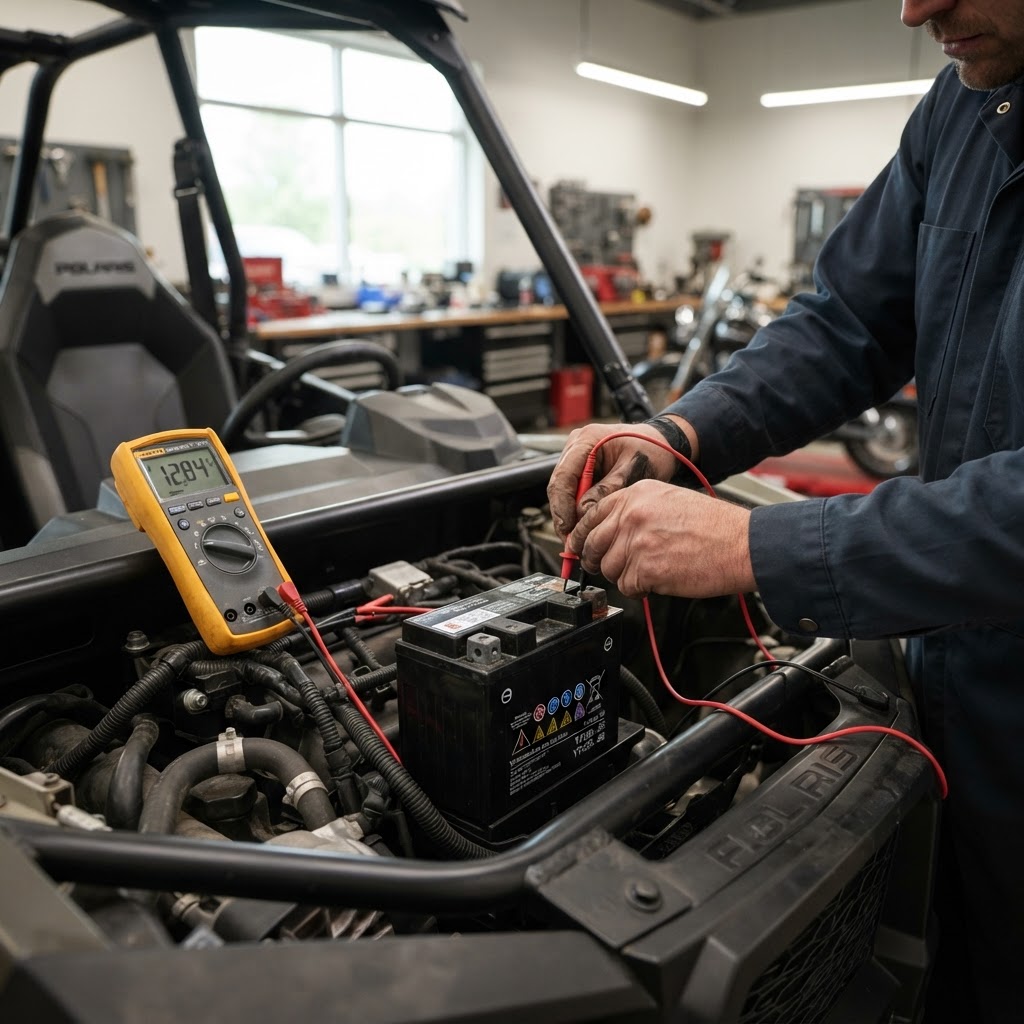
- Voltage Testing: Use a multimeter to check the resting voltage. A fully charged 12V battery should read approximately 12.6 to 12.8 volts.
- Use a Battery Tender: If your machine will sit for more than two weeks, connect a smart battery tender. This prevents the battery from self-discharging and keeps it in peak condition.
Troubleshooting Electrical Issues
If you are experiencing consistent power loss, the issue might not be the battery itself. A faulty voltage regulator can fail to charge the battery while the engine is running, or it may overcharge it, causing the battery to boil over. If you suspect a deeper electrical fault, our service department can perform a professional diagnostic to pinpoint whether you need a new charging component or simply a fresh battery.
Battery Maintenance Checklist
| Task | Frequency | Why It Matters | | :--- | :--- | :--- | | Terminal Cleaning | Every 3 months | Prevents resistance and poor connections | | Voltage Check | Before every ride | Ensures you aren't stranded on the trail | | Trickle Charging | During storage | Prevents sulfation and capacity loss | | Cable Inspection | Every 6 months | Identifies fraying or loose wires early |
Professional Tips for Long-Term Reliability
When replacing your battery, always choose a unit that meets or exceeds the Cold Cranking Amps (CCA) rating recommended by the manufacturer. If you frequently add accessories like winches or light bars, consider upgrading to an AGM (Absorbed Glass Mat) battery, which is more resistant to vibration and deep discharge cycles. For those who ride in extreme conditions, ensure your battery is securely mounted to prevent internal plate damage from rough terrain.
If you are unsure about your specific model's requirements, check our brands page to see the high-quality manufacturers we trust for our own shop builds. Proper care today saves you from a costly tow tomorrow.
Conclusion
Consistent UTV battery maintenance is a small investment of time that pays off in reliability and peace of mind. By keeping your connections clean, monitoring voltage, and utilizing a battery tender during downtime, you can significantly extend the life of your electrical system. If you encounter persistent issues, don't hesitate to reach out to our shop for expert advice or to browse our selection of reliable replacement parts.
FAQ
How often should I charge my UTV battery?
If you ride weekly, your charging system should keep the battery topped off. However, if the machine sits for more than two weeks, you should use a smart battery tender to maintain the charge. This prevents the battery from dropping below the threshold where sulfation begins to damage the internal plates.
Can a bad starter relay drain my battery?
Yes, if the internal contacts of the starter relay weld together in the closed position, it can create a constant draw on the battery. This will drain the battery completely even when the ignition is turned off, potentially damaging the battery and the starter motor in the process.
What is the best way to clean battery terminals?
Mix a small amount of baking soda with water to create a paste. Apply this to the terminals to neutralize any acidic corrosion, then scrub with a wire brush. Rinse with clean water and dry thoroughly before reconnecting the cables. Always wear eye protection when working with batteries.
Why does my UTV battery keep dying?
Frequent battery death is usually caused by a parasitic draw, a failing voltage regulator, or a battery that has reached the end of its service life. If the battery is more than three years old, it may simply be unable to hold a charge. Otherwise, have your charging system tested for proper output.