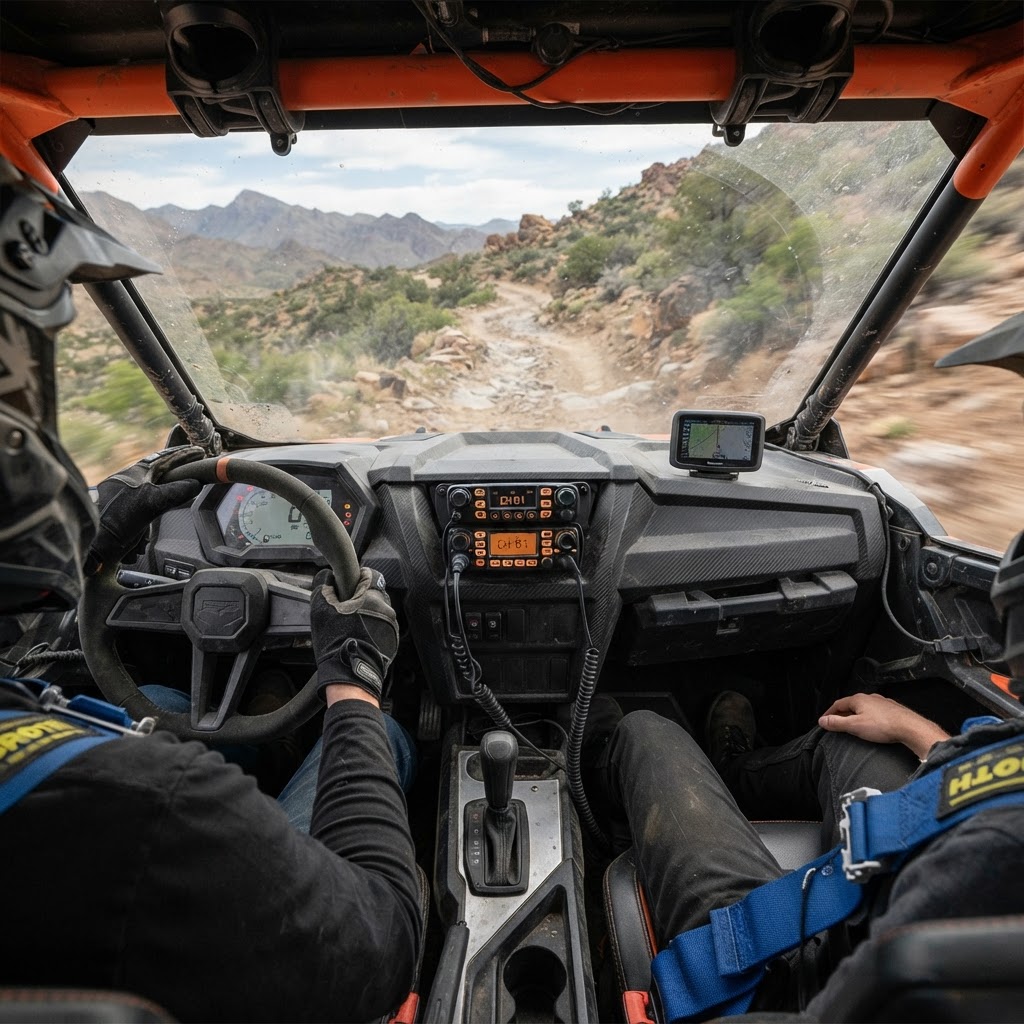
Upgrade your off-road experience with UTV communication systems. Learn how to choose between intercoms and radios for clear, reliable trail connectivity.
UTV communication systems are essential upgrades for any off-road enthusiast looking to maintain clear contact with passengers and other vehicles. Whether you are navigating tight trails or wide-open dunes, these systems eliminate the need for hand signals by providing reliable, noise-canceling audio that cuts through engine and wind noise. A complete setup typically combines an intercom for in-cab conversation with a two-way radio for vehicle-to-vehicle communication, ensuring your group stays safe and synchronized throughout the ride.
Understanding UTV Communication Components
To build the right setup, you must distinguish between the two primary technologies: intercoms and two-way radios. An intercom system is designed specifically for internal communication, allowing the driver and passengers to speak naturally through headsets or helmet kits. These units often feature noise-filtering technology to ensure voices remain crisp even at high speeds.
In contrast, a two-way radio allows you to communicate with other vehicles in your group. Most modern off-roaders prefer GMRS (General Mobile Radio Service) due to its superior range and audio clarity compared to older CB systems. By integrating both into a single, vehicle-specific kit, you gain the ability to talk to your passengers and your riding partners simultaneously.
Key Features to Consider
When shopping for your system, look for these critical features:
- Bluetooth Connectivity: Allows for wireless music streaming and hands-free phone calls.
- VOX (Voice Operated Exchange): Automatically activates the microphone when you speak, keeping your hands on the wheel.
- Vehicle-Specific Mounts: Ensures a factory-clean look and secure fitment in your dash.
- Noise-Canceling Headsets: Essential for maintaining audio quality in high-decibel environments.
Installation and Fitment Tips
Installation of UTV communication systems has become significantly more user-friendly. Many manufacturers now offer plug-and-play wiring harnesses and custom dash mounts tailored to specific models like the Polaris RZR or Can-Am Maverick. If you are based near our Auburn, California retail basecamp, our team can assist with fitment advice to ensure your components are positioned for optimal ergonomics. For those ordering online, verify your vehicle's dash footprint, as some newer models may require remote-head intercoms to save space.
| Feature | Intercom System | Two-Way Radio | | :--- | :--- | :--- | | Primary Use | In-vehicle chat | Vehicle-to-vehicle | | Range | Internal (cabled) | 2–20+ miles | | Noise Filtering | High | Moderate | | License Required | No | Yes (GMRS) |
Safety and Performance Benefits
Beyond the convenience of chatting, these systems are vital safety tools. Being able to call out trail obstacles, warn of oncoming traffic, or coordinate a stop prevents accidents and keeps the group together. If you are building a custom rig, explore our shop for compatible headsets and mounts. We recommend testing your PTT (Push-to-Talk) button placement during a stationary dry run to ensure it is reachable without compromising your grip on the steering wheel.
Conclusion
Investing in high-quality UTV communication systems transforms your off-road adventures from isolated rides into a connected group experience. By choosing the right combination of intercoms and radios, you ensure that every passenger stays engaged and every driver stays informed. Whether you are upgrading for safety or convenience, our team at GAS UTV is here to help you find the perfect fit for your machine. Visit our about page to learn more about our expertise or contact us for personalized recommendations.
FAQ
What is the difference between an intercom and a radio?
An intercom connects passengers inside the same vehicle for clear, hands-free conversation. A two-way radio allows you to communicate with other vehicles in your group over a shared frequency. Most complete kits integrate both into one system.
Do I need an FCC license for my UTV radio?
Yes, if you are using a GMRS radio in the United States, you are required to obtain an FCC license. This is a simple administrative process that does not require a test and covers your entire immediate family.
Can I install these systems myself?
Most modern kits are designed for DIY installation with basic hand tools. They feature plug-and-play wiring and vehicle-specific mounts. If you encounter difficulties, our team in Auburn, California is available to provide technical guidance.
Will these systems work with my helmet?
Yes, most systems offer options for both over-the-head headsets and helmet kits. Ensure you select the correct connector type for your specific intercom unit to guarantee compatibility and audio clarity.