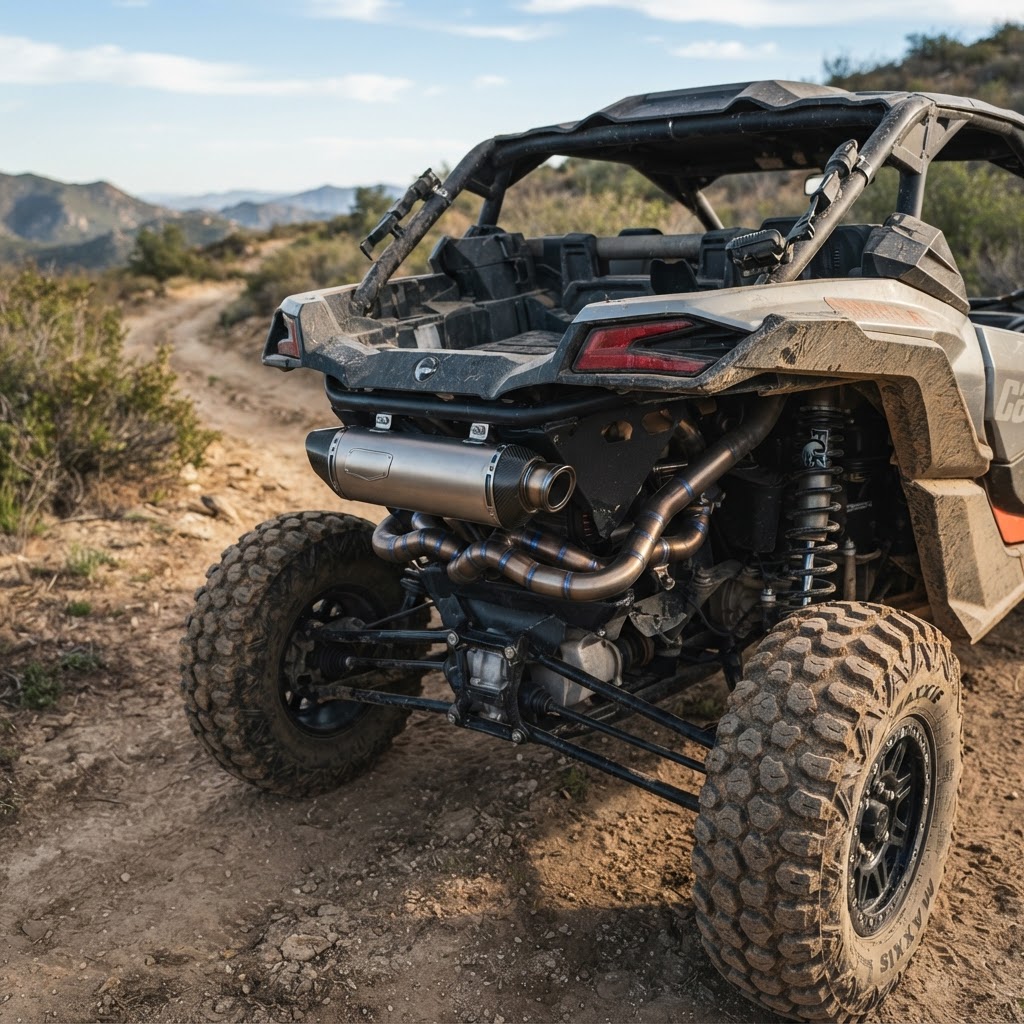
Considering UTV exhaust upgrades? Learn the key differences between slip-on mufflers and full systems to boost your side-by-side's performance and sound.
Upgrading your UTV exhaust is one of the most effective ways to improve engine efficiency, throttle response, and sound. Whether you are looking for a deeper, more aggressive tone or seeking measurable horsepower gains, understanding the difference between slip-on mufflers and full exhaust systems is critical. A slip-on muffler replaces only the rear portion of your exhaust, offering a cost-effective way to change your machine's sound and aesthetics. In contrast, a full exhaust system replaces the entire assembly from the engine head pipe back, removing restrictive factory components to maximize airflow and power. At GAS UTV, we help riders in our Auburn, California retail basecamp and online navigate these choices to ensure the perfect fit for their specific vehicle. Online orders are subject to shipping destination availability.
Understanding UTV Exhaust Upgrades
Before purchasing, it is essential to define your goals. Are you chasing peak horsepower, or do you simply want a better exhaust note for trail riding? Factory exhaust systems are often designed with strict sound regulations and mass-production constraints in mind, which can leave performance on the table. Aftermarket UTV exhaust upgrades allow your engine to breathe more freely, which is the first step in unlocking hidden potential.
Slip-On Mufflers: The Entry-Level Performance Boost
Slip-on mufflers are the most popular choice for casual riders. They are designed to bolt directly onto your existing factory header pipe. Because they retain the stock head pipe, the performance gains are generally modest, but they provide a significant improvement in sound quality and weight reduction.
- Pros: Easier installation, lower cost, and often compatible with factory spark arrestors.
- Cons: Limited horsepower gains compared to full systems.
- Best For: Riders who want a better sound profile without needing complex engine tuning.
Full Exhaust Systems: Maximizing Power
If you are serious about performance, a full system is the way to go. By replacing the header, mid-pipe, and muffler, you eliminate the bottlenecks found in stock configurations. This increased flow allows the engine to scavenge exhaust gases more efficiently, leading to noticeable increases in torque and top-end power.
| Feature | Slip-On Muffler | Full Exhaust System | | :--- | :--- | :--- | | Installation | Simple (Bolt-on) | Moderate to Complex | | Power Gains | Minimal | Significant | | Weight Savings | Moderate | High | | Tuning Required | Rarely | Often Recommended |
Critical Considerations for Your Build
When selecting your exhaust, always prioritize vehicle-specific fitment. A system designed for a Polaris RZR will not fit a Can-Am Maverick. Furthermore, consider your local riding environment. If you frequent areas with strict noise ordinances, look for systems that offer "quiet core" inserts or forestry-qualified spark arrestors.
The Role of Fuel Tuning
When you install a full exhaust system, you are changing the air-fuel ratio of your engine. To prevent running lean—which can cause engine damage—you may need to pair your exhaust with a fuel controller or an ECU tune. Many of our customers at GAS UTV find that combining an exhaust upgrade with a high-flow air filter provides the best balance of reliability and performance. Explore our shop to see compatible tuning solutions for your specific model.
Safety and Maintenance
Aftermarket exhausts run hotter and flow more air than stock units. Ensure all heat shields are properly installed to protect surrounding plastics and wiring. Additionally, check your exhaust packing periodically. Over time, the sound-dampening material inside the muffler will degrade, leading to a louder, harsher sound and potential performance loss. Regular maintenance ensures your investment lasts through years of off-road abuse.
Conclusion
Choosing between a slip-on and a full system depends on your performance goals and budget. For most trail riders, a high-quality slip-on provides the perfect balance of sound and style. For those competing or seeking maximum power, a full system is the necessary path. Regardless of your choice, always verify fitment for your specific machine. If you are near our Auburn, California retail basecamp, stop by to discuss your build, or browse our guides for more technical insights. Online orders are subject to shipping destination availability.
Frequently Asked Questions
Will an aftermarket exhaust void my UTV warranty?
It depends on the manufacturer and the nature of the claim. Generally, an exhaust upgrade only voids the warranty if the dealer can prove the modification directly caused the specific failure. Always consult your owner's manual or local dealer before making major changes.
Do I need to tune my UTV after installing an exhaust?
For slip-on mufflers, a tune is often not required. However, for full exhaust systems, a fuel controller or ECU reflash is highly recommended to ensure the engine receives the correct amount of fuel, preventing overheating and maximizing power gains.
How do I know if an exhaust is 'forestry qualified'?
Look for the USFS (United States Forest Service) stamp on the muffler or packaging. This indicates the system includes an approved spark arrestor, which is legally required for riding on most public lands and national forests to prevent wildfires.
Can I install a UTV exhaust system myself?
Yes, most UTV exhaust systems are designed for bolt-on installation using standard hand tools. However, full systems may require removing body panels or other components. If you are uncomfortable with the process, our team at GAS UTV is happy to assist with professional installation advice.