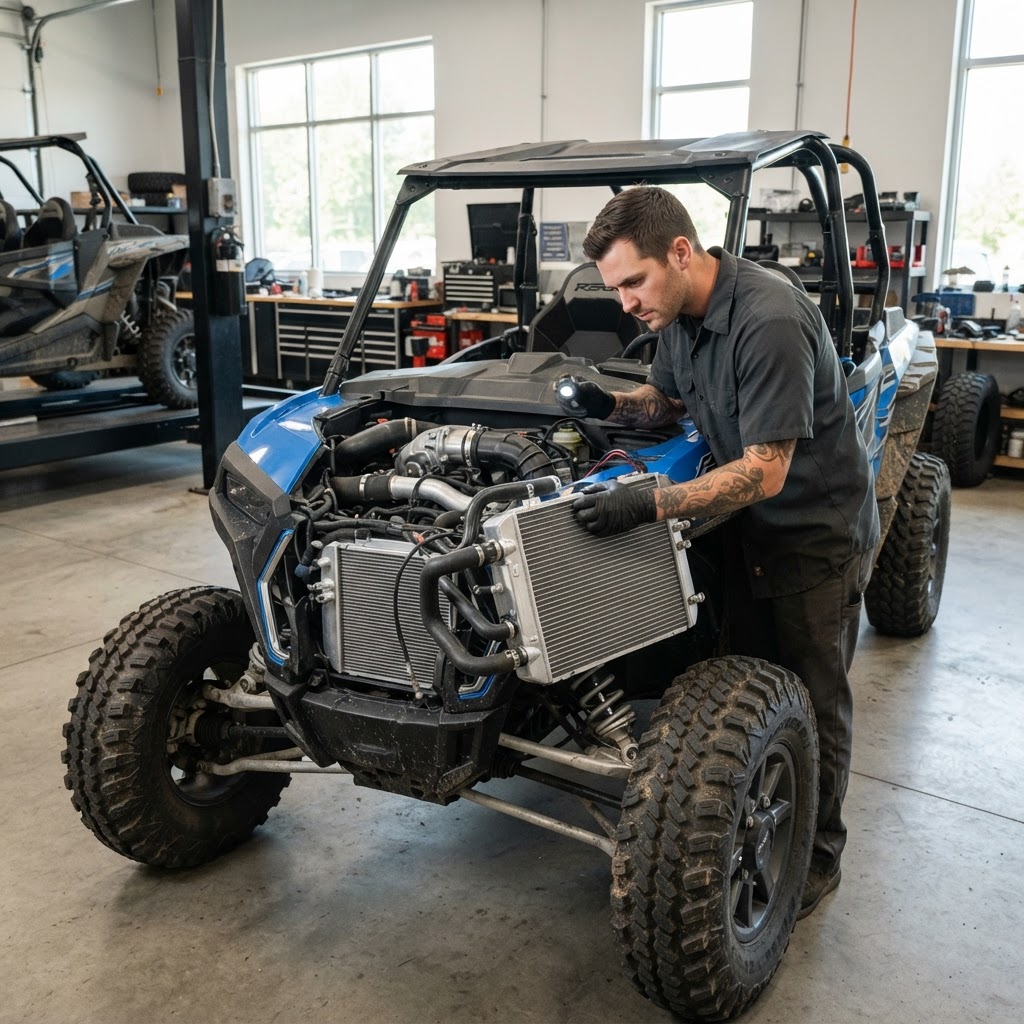
Discover proven UTV overheating fixes from powersports pros. Learn how to diagnose high engine temps, clear air locks, test thermostats, and prevent trail limp mode.
To resolve a side-by-side that runs hot, reliable utv overheating fixes require identifying the breakdown in thermal exchange: clearing packed radiator core debris, burping trapped air locks from the plumbing, replacing stuck thermostats, repairing failed electric cooling fan circuits, or fixing leaking water pump mechanical seals. Left unaddressed, elevated operating temperatures warp cylinder heads and blow head gaskets. By isolating mechanical, fluid, and electrical faults through a systematic diagnosis, you can restore safe operating temperatures and protect your engine on demanding trails.
Core Symptoms: How to Tell Your UTV Is Overheating
Modern side-by-sides run tight operating temperature windows—typically between 185°F and 205°F. Once temperatures exceed 220°F to 230°F, the ECU triggers limp-mode protections to prevent catastrophic failure. Recognizing early warning signs prevents expensive engine rebuilds:
- Digital Dash Warnings: Flashing high-temp icons, check engine lights (CEL), or diagnostic trouble codes (such as Polaris 0-110-31 or Can-Am P0217).
- Loss of Power (Limp Mode): The ECU limits engine RPM or retards ignition timing to reduce cylinder head heat, causing sudden sluggishness.
- Coolant Venting & Steam: Pungent, sweet-smelling white vapor or coolant boiling over through the expansion tank overflow hose.
- Hissing or Gurgling: Audible boiling noises inside the cooling lines or radiator immediately after shutting down the ignition.
- Continuous Fan Operation: The radiator cooling fan runs at maximum duty cycle without cycling off, even during light cruising.
5 Common Causes of High Engine Temperatures and Their Fixes
Diagnosing an overheating machine begins at the radiator face and moves inward through the hydraulic circuit to the mechanical engine core.
| Failure Point | Primary Symptom | Diagnostic Check | Shop Fix | | :--- | :--- | :--- | :--- | | Clogged Radiator Fins | Creeping temps at trail speeds | Backlight inspection behind core | Low-pressure reverse wash & fin comb | | Trapped Air Lock | Rapid temp spikes right after start | Upper hose hot, lower hose cold | Front-elevated vacuum/bleed procedure | | Stuck Thermostat | Extreme temp divergence in hoses | Infrared thermal gun on thermostat housing | Replace with OEM-spec thermostat & new gasket | | Fan Circuit Failure | Overheating only at idle/slow crawl | Check 30A fuse, relay trigger, fan motor power | Replace melted fuse block, relay, or motor | | Water Pump Cavitation | Coolant weeping from casing hole | Inspect weep hole beneath pump case for dried fluid | Install new impeller shaft, bearing, and mechanical seal |
1. Mud-Packed and Damaged Radiator Fins
Stock UTV radiators sit low in the front frame fascia, directly in the path of roost, mud, seed heads, and trail grit. Even a thin layer of dried, clay-like mud baked onto aluminum fins dramatically impedes heat transfer.
- The Fix: Never use a commercial high-pressure pressure washer directly against the radiator core, as it easily flattens the fragile aluminum fins. Instead, soak the core using foaming coil cleaner or biodegradable soap, then flush thoroughly from back to front with a standard garden hose nozzle. If fins are bent, use a plastic radiator fin comb to gently restore airflow pathways.
2. Air Pockets in the Cooling System
Because many sport and utility UTVs feature long coolant tubing routed beneath the floorboards between rear-mounted engines and front-mounted radiators, they are notorious for trapping air locks. An air pocket sitting at the water pump or cylinder head creates a localized hot spot and stops coolant circulation.
- The Fix: Burp the system. Elevate the front end of the UTV 10–12 inches on ramps or a lift so the radiator cap sits at the absolute highest physical point of the vehicle. Remove the cap cold, loosen the engine-side bleeder screw (commonly located near the thermostat housing), and slowly top off the system until pure coolant emerges without bubbles. Run the engine through a complete thermal cycle to allow the thermostat to open, top off the overflow bottle, and reinstall the cap.
3. Thermostat Failure
A thermostat stuck shut stops hot coolant from leaving the engine block to reach the radiator. A thermostat stuck partially open will cause thermal runaway when operating under high load, sand, or heavy mud.
- The Fix: Bench-test the thermostat by suspending it in a pot of water on a stove with a digital cooking thermometer. Confirm that the valve begins opening at the manufacturer's specified temperature (commonly 180°F) and opens fully approximately 15°F higher. If it binds, replace it immediately with an OEM-grade unit. Browse our curated selection of replacement cooling parts in our /parts-categories catalog.
4. Cooling Fan Relay, Fuse, or Motor Malfunction
If your machine maintains acceptable temperatures at 35 mph but begins boiling over within minutes of idling, tight rock crawling, or technical trail navigation, the electric fan is typically the culprit.
- The Fix: With the key on, jump 12V directly to the fan connector. If the fan spins briskly, the motor is intact; inspect the fan relay, thermal switch, temperature sensor, and chassis fuse box for corrosion or melted pins. Upgrading to a high-CFM waterproof, brushless fan assembly provides greater airflow when powering heavy accessorized rigs. Explore trusted names across our /brands directory.
5. Water Pump Impeller and Mechanical Seal Wear
A plastic stock water pump impeller can strip its drive teeth or soften under high temperatures, spinning freely on the shaft without circulating fluid. Additionally, worn mechanical seals will weep coolant from the pump housing weep hole.
- The Fix: Inspect the underside of the water pump housing. Any dried blue, green, or orange crust around the weep hole indicates failing mechanical seals. Remove the pump cover, verify the impeller is tightly keyed to the drive shaft, and upgrade to a billet aluminum high-flow impeller if running high engine loads.
Real-World Shop Scenarios: Diagnosing Two Tricky Failures
Scenario 1: The Sand Dune Overheat on a Polaris RZR
A customer brought in a turbocharged sport side-by-side that ran cool on hardpack trails but continuously overheated within 15 minutes of carving steep sand dunes. The radiator core was completely spotless.
- The Diagnosis: Testing the radiator cap with a pressure tester revealed it released pressure at 8 PSI instead of its stamped 16 PSI rating. In high-load dune conditions, the lower boiling point permitted coolant to flash into steam, air-locking the circulation pump.
- The Solution: Installing a fresh 16 PSI OEM pressure cap and burping the system resolved the issue completely without requiring costly engine disassembly.
Scenario 2: Mud Crawling Temp Spikes on a Can-Am Defender
A working ranch vehicle was boiling coolant only when towing a feed trailer through low-speed creek bottoms.
- The Diagnosis: An infrared surface thermometer revealed the top half of the radiator was 205°F while the bottom half was barely 110°F. The core had accumulated internal silicate fallout and sediment from years of tap-water fill-ups.
- The Solution: We flushed the cooling circuit with a mild chemical descaler, backflushed the radiator independently, and refilled with an aluminum-safe 50/50 ethylene glycol pre-mix. Operating temperatures normalized across the entire core.
Preventative Maintenance Checklist for Trail Riders
Taking basic proactive steps before departing for remote trailheads keeps engine temps under control:
- [ ] Check fluid level in both the radiator (cold only) and the recovery tank reservoir.
- [ ] Inspect radiator rubber sealing shrouds to confirm forced airflow is not bypassing the core.
- [ ] Use a bright flashlight behind the radiator to verify zero dirt or seed blockage.
- [ ] Test that the cooling fan spins freely by hand with the key off.
- [ ] Inspect high-pressure coolant hoses for chafing against the frame, dry rot, or soft spots.
- [ ] Confirm the radiator cap rubber gasket is supple and free of cracks or tears.
For major overhauls, custom performance cooling packages, or factory scheduled service, schedule an appointment directly at our local /shop.
Summary of Essential UTV Overheating Fixes
Implementing the right utv overheating fixes comes down to maintaining clean radiator airflow, maintaining correct hydraulic system pressure, eliminating air pockets, and verifying that the fan and water pump circulate heat away from the engine. By systematically working through these diagnostic steps, you can protect your powertrain investment and enjoy trouble-free rides in all off-road conditions.
Frequently Asked Questions
Can I use tap water to top off my UTV coolant on the trail?
Only use tap water in an emergency to limp back to camp. Tap water contains minerals that create scale deposits inside the aluminum cooling channels and degrade the water pump's mechanical seal. As soon as you return, thoroughly flush the entire cooling system and refill it with a 50/50 blend of distilled water and aluminum-safe antifreeze.
At what temperature should my UTV cooling fan kick on?
On most modern side-by-sides, the factory ECU signals the cooling fan relay to activate between 200°F and 208°F (93°C to 98°C). The fan typically continues spinning until running temperatures drop below roughly 190°F to 195°F. If your gauge shows 215°F or higher and the fan has not engaged, immediately investigate the fan fuse, relay, or motor.
Why does my UTV overheat only when idling or driving slowly?
Overheating exclusively during slow speeds or idling indicates insufficient passive airflow through the radiator core. This is almost always caused by a failed radiator cooling fan, a tripped fan circuit breaker, heavily compacted mud deep inside the core fins, or missing fan shrouds that allow air to bypass the core rather than pulling through it.
How often should I flush and replace the coolant in my UTV?
Most powersports manufacturers recommend a complete coolant flush every two years or 200 operating hours, whichever comes first. Over time, corrosion inhibitors deplete, and the fluid's ability to resist boil-over drops. If the coolant looks cloudy, rust-colored, or contains suspended particles, flush and refill the system immediately.