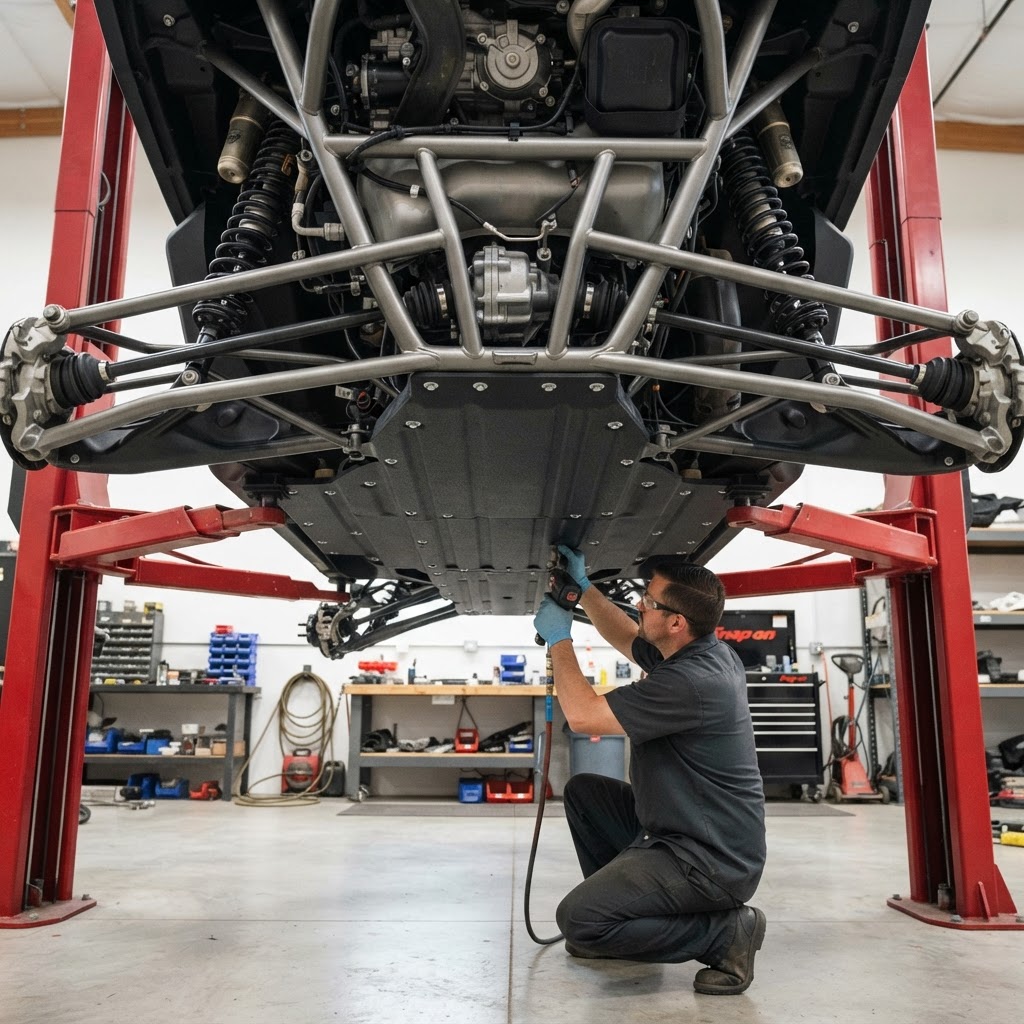
Protect your investment with UTV skid plates. Learn why upgrading your factory underbody armor is the best way to prevent costly trail damage.
Upgrading your UTV skid plates is the single most effective way to protect your machine’s vital drivetrain components, fuel lines, and floorboards from expensive trail damage. Factory plastic under-armor is rarely sufficient for aggressive terrain, leaving your oil pan, transmission, and differentials vulnerable to jagged rocks, stumps, and debris. By installing a high-quality aftermarket skid plate, you ensure your vehicle can slide over obstacles rather than catching on them, significantly extending the life of your chassis and critical mechanical parts. Whether you are a weekend trail rider or a dedicated rock crawler, underbody protection is the foundation of a reliable build. When you are ready to upgrade, browse our full selection of parts-categories to find the perfect fit for your specific make and model. Choosing the right material is the first step in your upgrade journey. While steel was once the industry standard, it has largely been replaced by more advanced materials that offer better performance without the weight penalty. Aluminum is a popular choice for its rigidity and impact resistance, though it can dent over time. Today, Ultra-High-Molecular-Weight (UHMW) polyethylene has become the gold standard for most riders. UHMW is incredibly durable, flexible enough to absorb impacts without cracking, and possesses a low coefficient of friction, allowing your UTV to glide over boulders that would stop a metal plate in its tracks. ## Why Factory Protection Isn't Enough Most stock UTVs come with thin, segmented plastic guards that are designed more for debris deflection than structural protection. These factory pieces often leave gaps where rocks can wedge into the frame or puncture the floorboards. A full-chassis aftermarket skid plate provides a seamless barrier, covering the entire underbelly from the front bumper to the rear differential. This comprehensive coverage prevents the cumulative damage that often goes unnoticed until a major component fails. If you are unsure about which coverage level is right for your riding style, our team is available to help you navigate the options in our shop. ## Key Considerations for Choosing Skid Plates Before purchasing, consider these three critical factors: * Material: Decide between UHMW for its slick, impact-absorbing properties or aluminum for maximum rigidity. * Coverage: Determine if you need a full-belly kit or if you should also add A-arm guards and rock sliders for complete protection. * Fitment: Always verify your specific year, make, model, and trim level, as mounting points can vary significantly even within the same model family. ## Installation and Maintenance Tips Installing a new skid plate is a manageable project for most DIY enthusiasts, but it requires attention to detail. Always organize your hardware before starting, and use the provided instructions as your primary guide. Avoid over-tightening bolts, as this can stress the mounting points or damage the plate material. Unlike metal plates, which may require rust treatment or painting, UHMW plates are virtually maintenance-free. Simply inspect them after heavy rides for loose hardware or deep gouges that might indicate a need for replacement. For those who prefer professional installation, our gallery showcases some of our recent custom builds where we have integrated heavy-duty protection systems. ## Conclusion Investing in high-quality UTV skid plates is an insurance policy for your machine. By shielding your undercarriage from the hazards of the trail, you avoid the downtime and high costs associated with repairing punctured oil pans or damaged differentials. Whether you choose the slick performance of UHMW or the rugged strength of aluminum, the peace of mind provided by proper underbody armor is unmatched. ### Frequently Asked Questions #### Is UHMW better than aluminum for skid plates? UHMW is generally preferred for trail riding because it is flexible, absorbs impact without denting, and allows the UTV to slide over obstacles. Aluminum is stiffer and provides excellent protection, but it can dent and may create more noise when rocks strike the surface. #### Do I need full-belly coverage or just center plates? Full-belly coverage is recommended for most riders because it protects the entire drivetrain, including fuel lines and floorboards. Partial plates leave vulnerable areas exposed, which can lead to expensive repairs if a rock strikes an unprotected section of the frame. #### Can I install a skid plate by myself? Yes, most aftermarket skid plate kits are designed for bolt-on installation. However, it is often easier to have a second person help hold the plate in place while you align the mounting hardware. Always use the specific instructions provided with your kit. #### How often should I inspect my skid plates? You should inspect your skid plates after every major ride. Look for loose hardware, missing bolts, or deep gouges that could compromise the structural integrity of the plate. Tightening hardware periodically ensures the plate remains secure and prevents rattling.