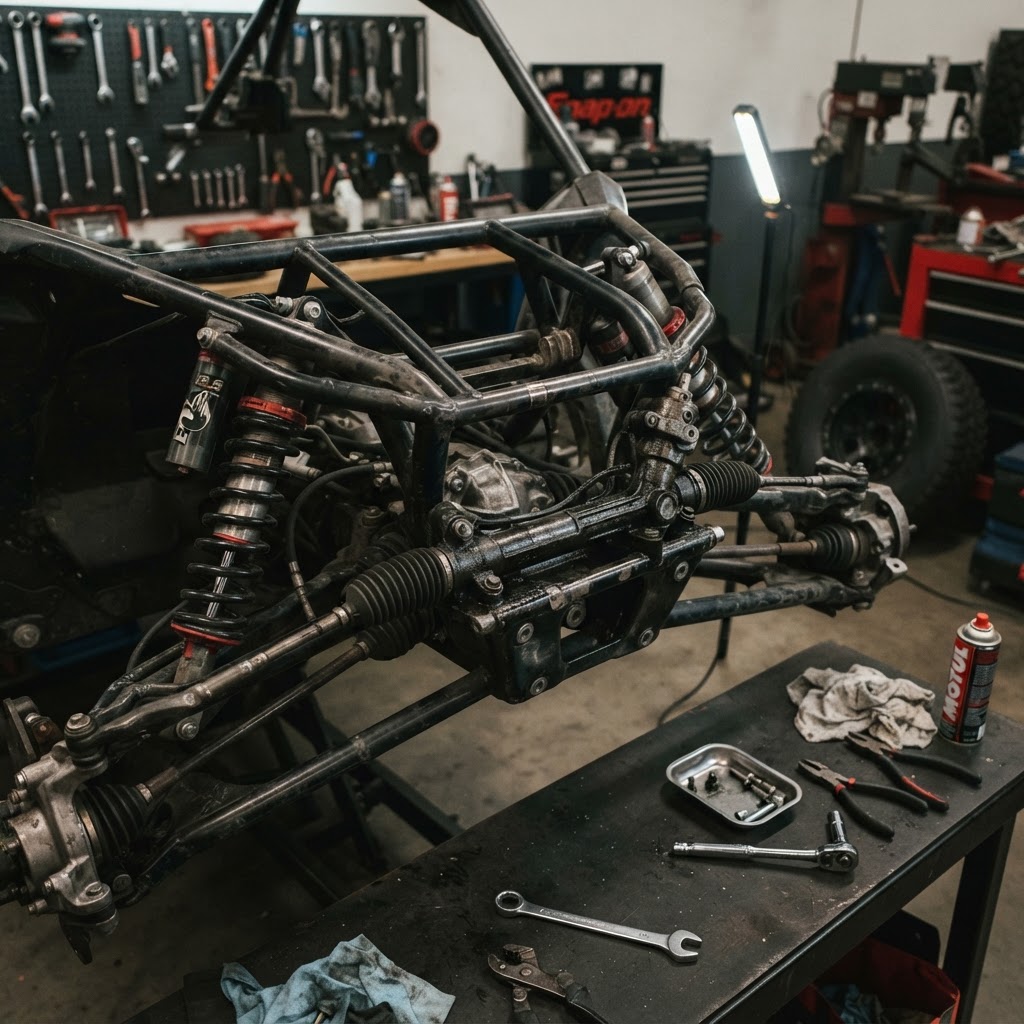
Experiencing loose steering or clunking noises? Learn the top signs of UTV steering rack failure and how to diagnose and fix your rig's steering system.
If your UTV feels loose, makes clunking noises during turns, or exhibits excessive play in the steering wheel, you are likely dealing with UTV steering rack failure. Addressing these symptoms early is critical to preventing a total loss of control on the trail. A failing rack and pinion system often starts with subtle vibrations or a slight 'dead zone' in the steering wheel, which quickly progresses to binding or complete mechanical failure if left unaddressed. As a shop that specializes in off-road performance, we see many riders ignore these warning signs until they are stranded in the backcountry.
Common Symptoms of Steering Rack Issues
Identifying the problem early can save you from expensive secondary damage to your tie rods, ball joints, and even your power steering motor. Watch for these primary indicators:
- Excessive Steering Play: If you can turn the wheel significantly before the tires move, your rack internals or bushings are likely worn.
- Clunking or Popping Noises: Audible clicks during low-speed maneuvers often indicate loose mounting bolts or internal gear wear.
- Fluid Leaks: If your unit has power steering, look for oil pooling around the rack boots. A torn boot allows dirt and grit to destroy the internal seals.
- Uneven Tire Wear: Misalignment caused by a loose rack will cause your tires to scrub and wear prematurely.
Diagnosing Your Steering System
Before assuming the rack is dead, perform a quick inspection. Jack up the front of your UTV and secure it on jack stands. Grab the front tires at the 3 and 9 o'clock positions and push/pull firmly. If you feel movement, check the tie rod ends first. If the tie rods are tight but the steering shaft still moves independently of the tires, the issue is likely inside the rack housing. You can browse our parts-categories to find replacement components if you identify a specific failure point.
When to Replace vs. Repair
In many cases, a UTV steering rack is a sealed unit. While some components like tie rod ends are replaceable, internal gear damage usually requires a full assembly replacement. If you are frequently riding in deep mud or rocky terrain, consider upgrading to a heavy-duty aftermarket rack. These units often feature larger internal gears and reinforced housings designed to withstand the abuse of oversized tires and aggressive driving. Check out our brands page to see which manufacturers offer the best durability for your specific model.
Professional Installation Tips
Replacing a steering rack is a labor-intensive job that requires precision. Always ensure your vehicle is properly aligned after installation. Even a slight toe-in or toe-out error can lead to 'darty' handling and accelerated wear on your new parts. If you are unsure about the process, our shop team is available to handle the installation and ensure your geometry is set to factory specifications.
Safety Checklist for Steering Maintenance
- Inspect Boots: Check for tears or cracks every time you wash your rig.
- Check Hardware: Ensure all mounting bolts are torqued to the manufacturer's specification.
- Grease Points: If your aftermarket rack has zerk fittings, keep them lubricated to prevent seizing.
- Verify Alignment: Always check your toe settings after any suspension or steering work.
Conclusion
Don't let UTV steering rack failure ruin your next ride. By staying proactive with your inspections and addressing loose steering or strange noises immediately, you can maintain the precision and safety of your machine. Whether you need a simple tie rod replacement or a full rack upgrade, our team is here to help you get back on the trail with confidence. Visit our gallery to see some of our recent custom builds and steering upgrades.
Frequently Asked Questions
How do I know if my UTV steering rack is bad?
Common signs include excessive play in the steering wheel, clunking noises when turning, fluid leaks from the rack boots, and a vehicle that wanders or pulls to one side while driving on flat ground.
Can I drive with a failing steering rack?
It is highly discouraged. A failing rack can seize or break completely, leading to a total loss of steering control. This is especially dangerous at high speeds or on technical terrain where precise input is required.
Does tire size affect steering rack life?
Yes. Running oversized tires increases the stress on your steering components significantly. The added leverage and weight put extra strain on the rack gears and bushings, often leading to premature failure compared to stock setups.
How often should I inspect my steering system?
We recommend a thorough inspection of your steering components every 50 hours of ride time or after any particularly rough trip involving deep mud, water crossings, or heavy rock crawling to ensure no debris has compromised the seals.