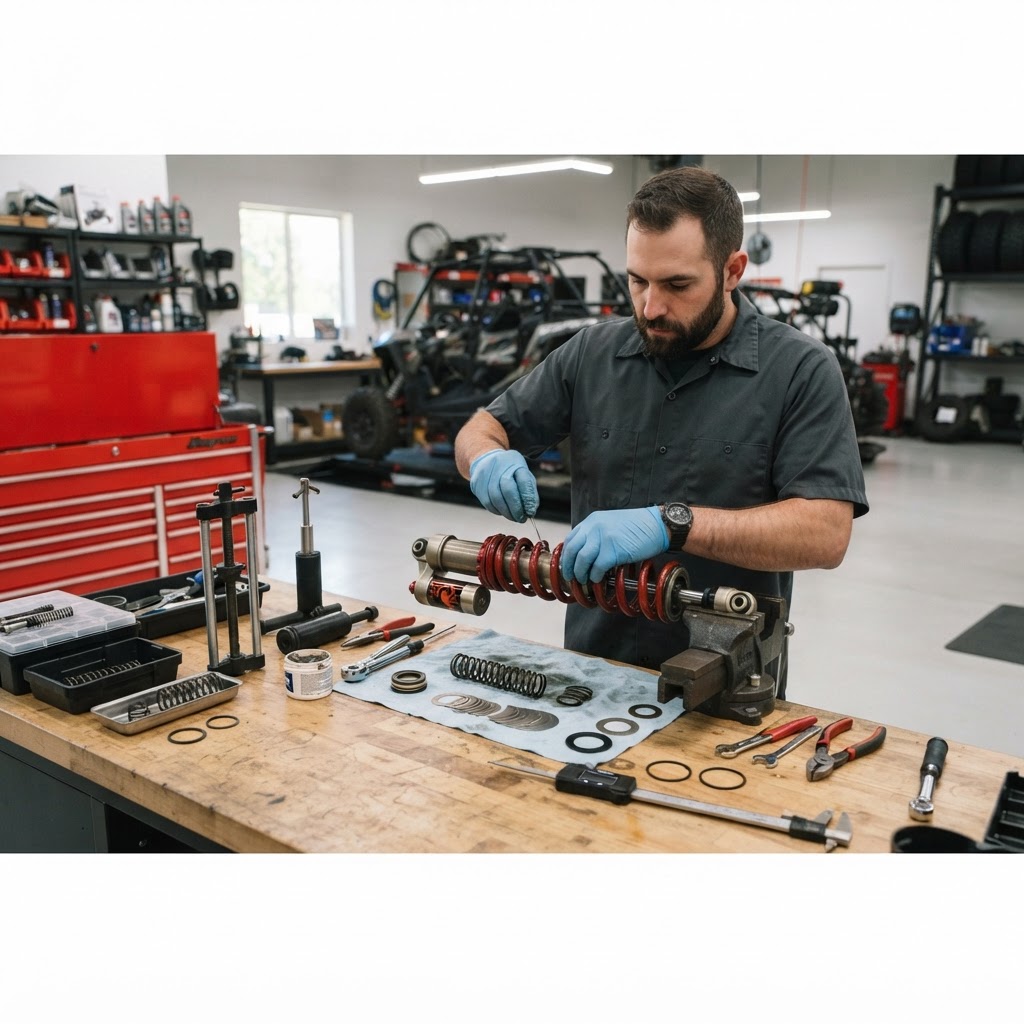
Is your UTV ride feeling harsh or bottoming out? Learn when a UTV suspension rebuild is necessary to restore handling, safety, and off-road performance.
A UTV suspension rebuild is essential when your machine begins to feel sluggish, bottoms out on minor trail obstacles, or shows visible signs of oil leakage around the shock seals. If your ride quality has degraded significantly compared to when the vehicle was new, your shocks likely require a professional teardown, nitrogen recharge, and seal replacement to restore factory-level damping performance. Ignoring these symptoms can lead to accelerated wear on your A-arms, bushings, and tires, turning a simple maintenance task into a costly repair bill. Whether you are a weekend trail rider or a competitive racer, keeping your suspension in top shape is the best way to ensure safety and comfort on rough terrain.
Signs Your UTV Needs a Suspension Rebuild
Suspension components are the unsung heroes of your off-road experience. Over time, the internal oil breaks down, nitrogen pressure escapes, and seals harden, leading to a loss of control. Watch for these common indicators that it is time for service:
- Oil Weeping: Visible oil residue on the shock shaft indicates a failed seal that will eventually lead to total damping loss.
- Bottoming Out: If you feel harsh metal-on-metal impacts on trails you used to clear easily, your shocks have lost their ability to manage compression.
- Excessive Bouncing: If the vehicle continues to oscillate after hitting a bump, your rebound damping is likely compromised.
- Sagging Ride Height: If your UTV sits lower than factory specifications even without a load, your springs may be fatigued or your internal shock pressure is gone.
For those looking to upgrade or replace worn components, browse our parts-categories to find the right fit for your specific model.
The Importance of Professional Shock Tuning
Many riders assume that a UTV suspension rebuild is just about replacing seals, but it is actually an opportunity to tune the machine to your specific riding style. A professional shop can adjust valving to better suit your local terrain, whether you frequent rocky mountain passes or high-speed desert trails.
Why Custom Valving Matters
- Terrain Adaptation: Softer valving improves comfort on washboard roads, while firmer settings prevent bottoming in deep whoops.
- Payload Management: If you frequently carry heavy gear or passengers, custom valving ensures the shock can handle the extra weight without sacrificing travel.
- Heat Dissipation: High-performance valving helps manage internal oil temperatures, preventing the "shock fade" that occurs during long, aggressive rides.
If you are unsure about your current setup, our team can help you evaluate your needs. Check out our gallery to see examples of custom builds we have dialed in for local riders.
Maintenance Schedule and Best Practices
How often you service your suspension depends heavily on your riding intensity. Aggressive riders who push their machines in mud, sand, or rocky environments should aim for an annual service or every 3,000 to 5,000 miles.
Routine Inspection Checklist
- Clean the Shafts: Use a low-pressure hose to remove mud and grit. Avoid high-pressure sprayers near seals, as they can force contaminants inside.
- Check Mounting Points: Inspect bolts and eyelets for signs of wear, rust, or bending.
- Monitor Bushings: Worn bushings often mimic bad shock symptoms. Ensure your A-arm and radius rod bushings are tight.
- Measure Sag: Periodically check your ride height with your typical gear load to ensure your springs haven't settled too far.
For a full assessment of your machine's health, visit our shop to schedule a professional inspection.
Conclusion
Maintaining your UTV suspension is not just about comfort; it is about protecting your investment and ensuring your safety on the trail. By recognizing the early signs of shock degradation and committing to a regular service interval, you can keep your machine performing at its peak. Whether you need a simple seal replacement or a full revalve, addressing these issues early prevents long-term damage to your chassis and drivetrain. Don't let a worn-out suspension ruin your next adventure—stay proactive and keep your ride dialed in.
Frequently Asked Questions
How often should UTV shocks be rebuilt?
Most manufacturers and professional shops recommend a full UTV suspension rebuild every 3,000 to 5,000 miles. However, if you ride aggressively in harsh conditions like deep mud or high-speed desert, you should aim for an annual service to prevent internal component failure.
Can I rebuild my UTV shocks myself?
While some enthusiasts perform basic seal replacements, a full rebuild requires specialized tools, including a nitrogen charging system and vacuum bleeder. Improper assembly can lead to air bubbles in the oil, which ruins damping performance. For safety and reliability, professional service is highly recommended.
What is the difference between a rebuild and a revalve?
A rebuild involves replacing worn seals, fresh oil, and recharging the nitrogen to restore factory performance. A revalve involves changing the internal shim stacks to alter how the shock reacts to bumps, allowing you to customize the ride quality for your specific weight, terrain, and driving style.
Why does my UTV ride harsh after a few hours of riding?
This is often caused by "shock fade," where the internal oil heats up and thins out, causing the damping to become inconsistent. If your shocks feel great at the start of the day but harsh or bouncy later, you may need a rebuild or an upgrade to shocks with larger reservoirs for better cooling.